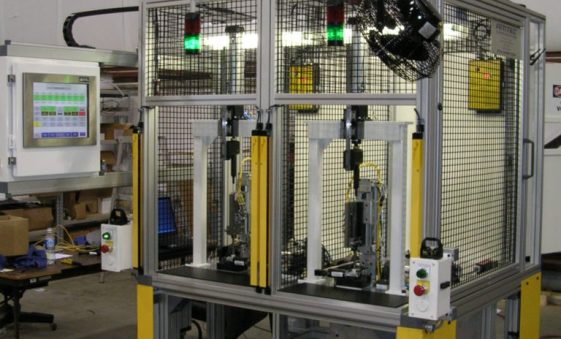


Designing structures that balance strength and weight has always been a challenge. Too much material makes assemblies heavy and costly, while too little reduces durability. MiniTec Aluminum Framing strikes a middle ground, offering a framing material that is both impressively lightweight and capable of supporting serious loads. The secret lies in a combination of extrusion design, alloy composition, and finishing techniques that work together to maximize performance.
Design Optimized with Hollow-channel Extrusions That Cut Overall Weight Without Sacrificing Rigidity
MiniTec aluminum framing material relies on hollow-channel extrusions that remove unnecessary mass while keeping structural stiffness. By eliminating excess solid volume, the design reduces overall weight without compromising integrity. This hollow-channel concept creates internal support through carefully engineered wall placement, ensuring the framing resists bending and torsion under load.
The advantage of this approach shows up in real-world builds. A MiniTec aluminum frame kit assembled with these profiles is easier to handle, transport, and reconfigure than solid alternatives. At the same time, the rigidity provided by the extrusion design means the structure can support machines, enclosures, and conveyor systems without the sagging or flexing one might expect from a lighter material.
Alloy Formulation Selected for a High Strength-to-weight Ratio Versus Conventional Steel Profiles
The base alloy in MiniTec extruded aluminum framing is chosen specifically for its balance of tensile strength and low density. While aluminum naturally weighs less than steel, the selected alloy blend ensures the framing withstands the mechanical stresses common in industrial environments. This strength-to-weight ratio gives it a clear advantage for applications that require durability without bulk.
Compared to steel profiles, MiniTec aluminum framing material provides similar load-bearing capability at a fraction of the weight. For contractors and engineers, this means assemblies can be built faster and adjusted more easily on-site. It also reduces long-term costs tied to shipping, installation, and modification, making it a practical choice where efficiency matters.
Uniform, Precision-driven Extrusion Process Ensuring Consistent Wall Thickness and Structural Integrity
One of the defining traits of MiniTec extruded aluminum framing is the consistency achieved during the extrusion process. Each profile is manufactured with uniform wall thickness, ensuring there are no weak points or inconsistencies. This precision allows the framing to maintain structural integrity even under repeated stress.
The benefits of this uniformity extend beyond durability. It ensures that every MiniTec aluminum frame kit fits together perfectly, with profiles sliding into connectors and brackets without gaps or misalignment. This precision gives engineers confidence that large-scale assemblies built with hundreds of profiles will maintain both form and function.
T-slot Geometry That Blends Modular Adaptability with Lightweight Build Efficiency
The T-slot design is not only about modularity but also about reducing unnecessary bulk. By integrating connection points directly into the extrusion, MiniTec aluminum framing eliminates the need for heavy additional brackets. This geometry keeps the system light while still offering infinite adaptability for fixtures, guards, and panels.
Builders appreciate that the T-slot design doesn’t add significant weight despite its versatility. The open channels double as structural reinforcements, which help distribute loads evenly across the frame. This means MiniTec extruded aluminum framing provides both engineering flexibility and weight-conscious efficiency in a single system.
Anodized Surface Treatments That Add Corrosion Resistance Without Heavy Coatings or Layers
Another factor in keeping the framing lightweight while maintaining strength is its anodized surface treatment. Instead of applying thick, heavy coatings, the aluminum is anodized, creating a durable oxide layer that protects against corrosion and wear. This finish enhances longevity without adding unnecessary material mass.
The anodized layer also provides a clean, professional appearance, which is especially valuable for workstations, enclosures, or architectural applications. By resisting scratches and oxidation, MiniTec aluminum framing material keeps its performance and aesthetics intact even in demanding industrial or outdoor conditions—all without the added bulk of traditional coatings.
Scalable Profile Range Allowing Load-bearing Spans with Minimal Material Volume
MiniTec offers profiles in different sizes and wall thicknesses, allowing users to match the right profile to the required load. This scalability means that lighter builds can use slimmer profiles, while heavy-duty applications can rely on larger cross-sections. The flexibility ensures no material is wasted, as each profile is tailored to its purpose.
This efficient use of material volume contributes directly to the lightweight strength balance. A MiniTec aluminum frame kit built with the appropriate mix of profiles achieves structural reliability with less material mass overall. For industries requiring both mobility and durability—like automation, aerospace support systems, or modular workstations—this scalable approach is what makes MiniTec aluminum framing stand out.